
Ecosystem
Creating nature-positive economies is essential for the safeguarding of biodiversity and to tackling the global challenges posed by rapid urbanisation and climate change.
Impact One collaborates with a network of leading industry and policy experts, to establish comprehensive methodologies aimed to foster ecosystem protection and restoration worldwide.
Nature and its services provide essential infrastructure for life on our planet. Nature-based solutions (nbs) are “actions to protect, sustainably manage, and restore natural or modified ecosystems, that address societal challenges effectively and adaptively.”
of the global mitigation required by 2030/2050 to meet the 1.5/2°C Paris Agreement targets could come from NbS
Impact One aims to facilitate a shift away from extractive human behaviour by redefining the way we value natural resources and assess their full life-cycle impact. By placing the natural environment and its regeneration at the centre of diversified strategies, we develop approaches that directly prompt ecosystem restoration to counteract the on-going and escalating impacts of the anthropocene.
Today, most economic activities and human approaches do not withstand the test of scale when applying ‘universal law’, which leads towards impossible futures for the planet.
One Health Research Centre
100% + X
From Building
to Growing Cities
We advocate for a 100% + X approach to compensation of unavoidable emissions. Aiming to go beyond net-zero, we conduct full life-cycle impact assessment reports to measure the true-value impact at every stage of the planning, construction and operational process.
The total value of intact forests and their ecosystem services estimated at $50-$150 trillion, i.e. up to 2x the value of global stock markets. In addition to forests' economic value and their mitigation potential, incorporating other Nature-based Solutions could also help to abate around 30% of total GHG emissions by 2030.
worth of goods and services such as clean water and healthy soils are provided by forests per year
people globally depend on forests for their livelihood (around 25% of the world’s population)
Ecosystems, such as the vast expanses of the Amazon rainforest, are intrinsically tied to global carbon balance and climate regulation. Addressing the complexities of ecosystem restoration requires more than just mere compensation strategies. it requires recognition of stewardship and ecological interdependencies, proactive measures reflecting local contexts, and a long-term commitment to sustaining biodiversity.
The environmental stewardship of indigenous communities illustrates symbiosis between human activity and the natural environment. Adopting their holistic perspectives and alternate forms of knowledge, Impact One offer viable solutions and alternative paths forward, in co-development with indigenous communities.
“ We have different value systems and understandings of what development means, what wellbeing means; in my community it means fertile soil, it means clean water, fresh air and it means the solidarity of our people. ”
Nina Gualinga
Indigenous Rights Activist, Kichwa People of Sarayaku
COP27 Possible Futures Event


Stewardship of ecosystems by indigenous peoples has systemic relevance for global sustainability efforts
of the lands maintained by indigenous peoples & Local Communities have been found to be in good or moderate ecological condition
Possible Futures
Through its Possible Futures initiative, Impact One works with indigenous communities from the Amazon and beyond, co-creating regenerative business models to support indigenous peoples’ stewardship of their lands, and by extension, the protection of some of our planet’s most vital ecosystems.
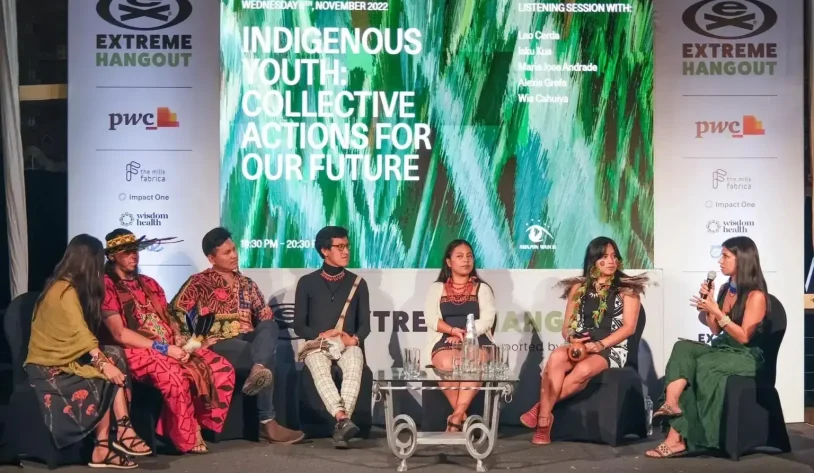
COP27
Through its Possible Futures initiative, Impact One works with indigenous communities from the Amazon and beyond, co-creating regenerative business models to support indigenous peoples’ stewardship of their lands, and by extension, the protection of some of our planet’s most vital ecosystems.
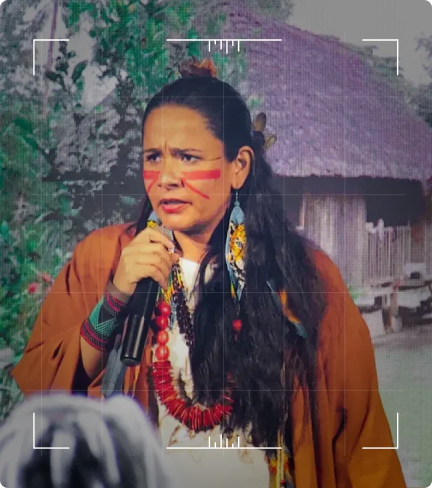
Shirley Krenak, Krenak People

Nina Gualinga, Kichwa People of Sarayaku
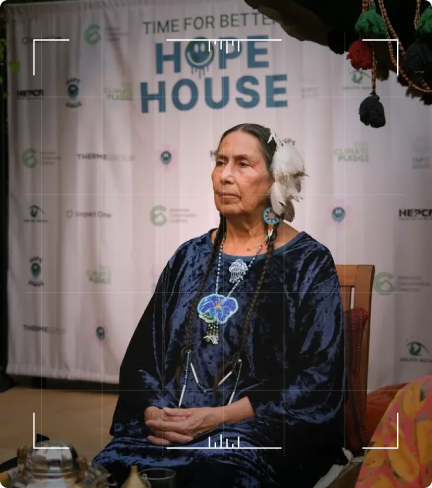
Casey Camp-Horinek, Ponca People
Winds of Yawanawa by Refik Anadol and the Yawanawa, commissioned by Impact One
Possible Futures’ collaboration with the Yawanawa communities of Aldeia Sagrada and Nova Esperança, from the Brazilian state of Acre, was publicly launched in July 2023 with the artwork series Winds of Yawanawa.
Co-created by the Yawanawa and media artist Refik Anadol, Winds of Yawanawa is a first-of-its-kind impact NFT collection that provides funding to the Yawanawa for cultural and natural heritage protection.
The project has made history as one of the most successful collection drops of the year, having raised $3.5 million so far. Profits go directly to the Yawanawa community, and will be used to support long-term initiatives for the protection of Yawanawa territories and cultural heritage.
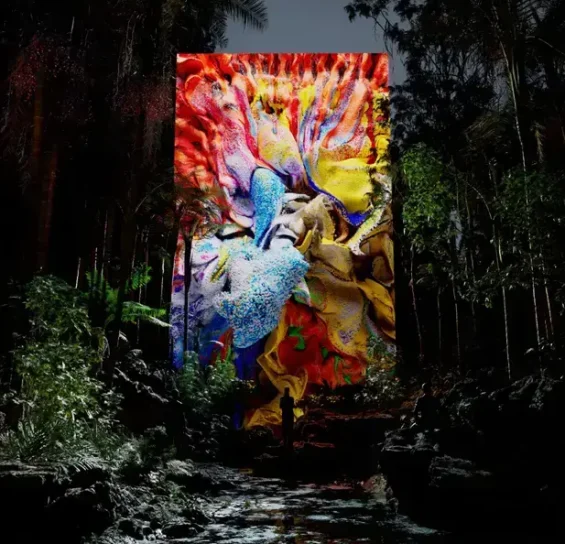
“ We are not the lungs of the world. we are the heart of the world. ”
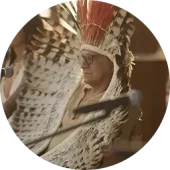
Yawanawa Chief Nixiwaka Yawanawa
Launch of Winds of Yawanawa at Scorpios
Today, most economic activities and human approaches do not withstand the test of scale when applying ‘universal law’, which leads towards impossible futures for the planet.
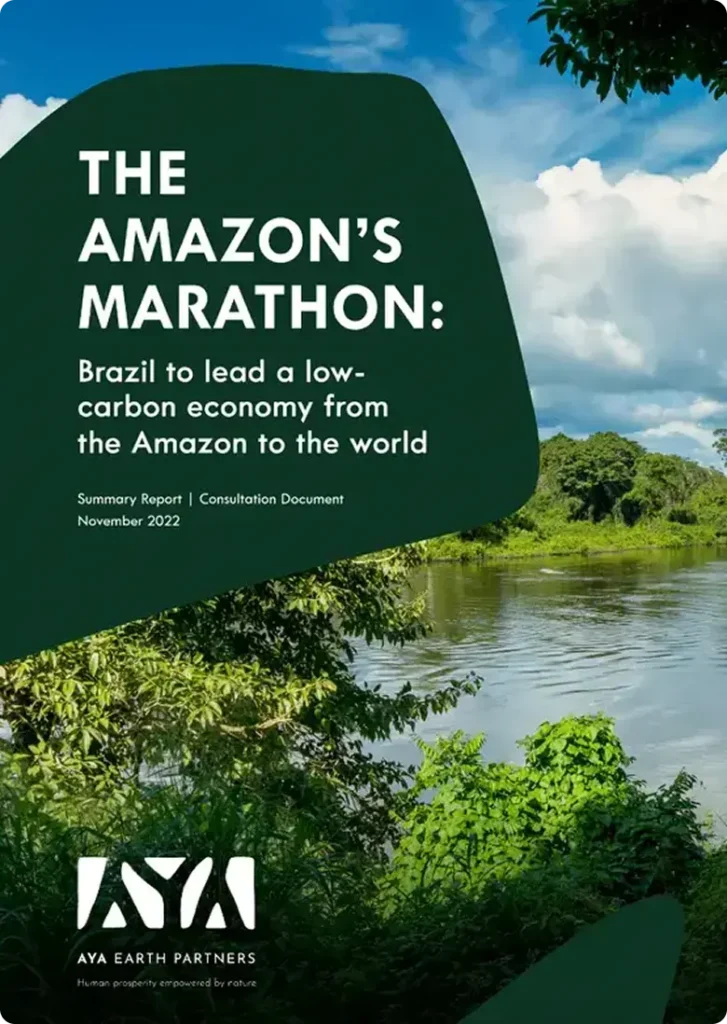
Aya Earth partners with Impact One
The Amazon’s Marathon:
Brazil to lead a low
-carbon economy from the Amazon to the world
Proposing an economic development plan for Brazil to become the first major economy to achieve net-zero while at the same time boosting economic growth.
of total funding for terrestrial ecosystem
restoration is generated by the private sector in Europe
The carbon market holds immense potential for directing funds toward emission reduction activities, but its existing structure has significant shortcomings in transparency, efficacy, and focus. 90% of rainforest carbon credits today do not represent real emission reductions. To address the climate crisis, we need more comprehensive compensation mechanisms.
Indigenous Biodiversity Credits (IBCs)
Under the Indigenous Biodiversity Credits, we are bringing together indigenous communities and industry experts to establish a framework for the issuance of a new standard of impact certificates. IBCs consider the broader spectrum of ecosystem services necessary for climate mitigation, and they recognise the systemic impact of indigenous stewardship of forest ecosystems to guarantee the highest standards, accountability and impact of environmental credits.
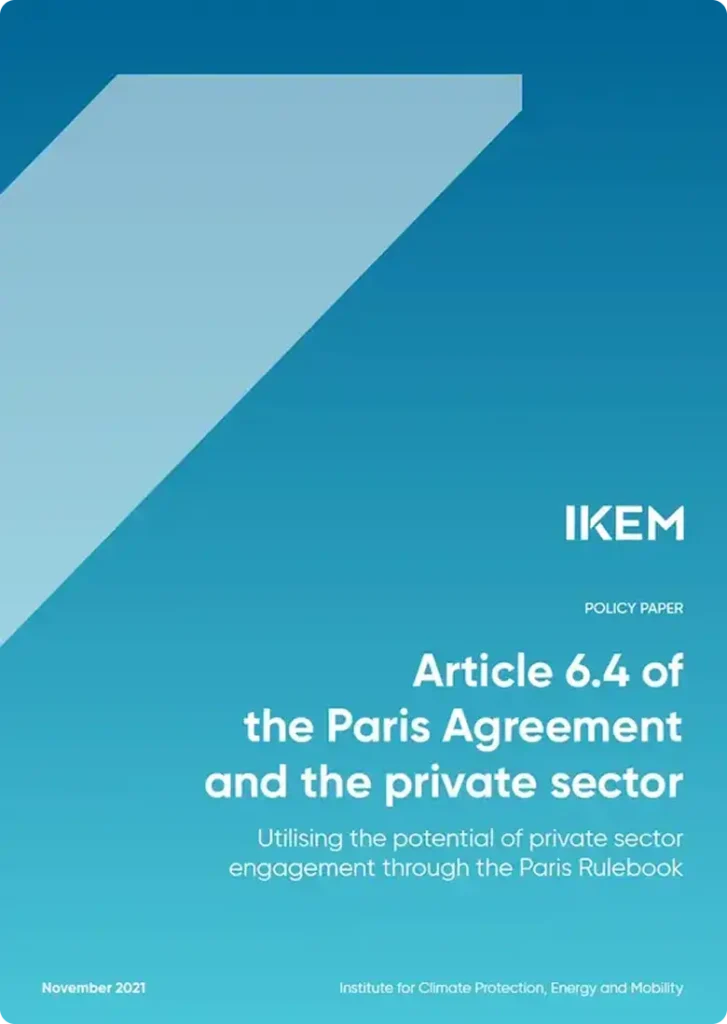
IKEM in partnership with the One Health
Research Centre
“Article 6.4 of the Paris Agreement and the private sector”
Utilising the potential of private sector engagement through the Paris Rulebook
Urban ecosystems face challenges from climate change, biodiversity loss, and pollution. Nature-based Solutions (NbS) are often underutilised in mainstream urban planning. However, they can enhance urban resilience, air quality, and social wellbeing. By integrating green infrastructure cities can combat the urban heat island effect, manage stormwater, support biodiversity, and foster
social cohesion.
One Health Research Centre
“Macro and Microclimate
Effects of Urban Afforestation
in Arid Climates”
A literature review delving into the potential of urban afforestation in arid settings as a multifaceted solution. Planned for scientific publication in early 2024